I'm still gaming, and still reading a lot on the power of games.
Here's a link to a BBC article on the empowering nature of games:
https://www.bbc.com/news/disability-47064773
It's about a man with Duchene's disease exploring his own capabilities through W.o.W. and his parents finding out about this rich experience only after he past away. Be prepared for feels...
Thursday, 18 April 2019

Thursday, 29 May 2014
3-D Ant
Simulators often have a dedicated group of fans that often mod, add to and improve the simulator of their liking. Besides a few popular simulators (sims and simcity) I've never really used a simulator. Though lately I have been captivated by Kerbal Space Program. It's a space exploration simulator that let's you build rockets and launch and manoeuvre them.
Most of the time simulators are perceived as different to games. There's usually no structure to guide a player nor is there an opponent. Still as ever being a game or not is not a dichotomy. KSP is one of those simulators that is beginning to bridge the divide.
One of the last updates for KSP has introduced a career mode. Instead of having ready access to all rocket parts from the start, you have to unlock several parts at a time by collecting research credits during missions. This forces you to think about efficiency and feasibility of your exploration missions. There will probably be a few more parameters added in the future, to make the carreer mode more challenging and realistic.
This career mode probably made it fun for me. Instead of having ready access to parts, I have to push myself while being introduced to space exploration on a step by step basis. Nothing is more frustrating then spending half an hour to get a craft in a lunar orbit, but crashing it during landing...
Simulator games can offer us many benefits as a training ground and often a cheap alternative for the real thing.
So here's a parable on space exploration, borrowed from the anime Space Brothers (宇宙兄弟):

 |
| Source: Fatal1ty.com |
Most of the time simulators are perceived as different to games. There's usually no structure to guide a player nor is there an opponent. Still as ever being a game or not is not a dichotomy. KSP is one of those simulators that is beginning to bridge the divide.
One of the last updates for KSP has introduced a career mode. Instead of having ready access to all rocket parts from the start, you have to unlock several parts at a time by collecting research credits during missions. This forces you to think about efficiency and feasibility of your exploration missions. There will probably be a few more parameters added in the future, to make the carreer mode more challenging and realistic.
This career mode probably made it fun for me. Instead of having ready access to parts, I have to push myself while being introduced to space exploration on a step by step basis. Nothing is more frustrating then spending half an hour to get a craft in a lunar orbit, but crashing it during landing...
Simulator games can offer us many benefits as a training ground and often a cheap alternative for the real thing.
So here's a parable on space exploration, borrowed from the anime Space Brothers (宇宙兄弟):
Once there were ants, only able to move forward on a straight path.
These 1-D ants walked on and on, till they met an obstacle.
It was a rock, and all the ants halted their way and panicked.
"How do we get passed it? " they said amongst themselves.
One ant rose up and said, "follow me!".
The ant showed them how to move left around the obstacle.
and at a next rock another ant showed them to move right.
The 2-D ant was born.
Able to move forward, left, right and backwards (left+left, right+right).
They travelled far, they travelled wide.
In the end they hit an obstacle, as far as they could travel left and right.
"How do we get passed it? " they said amongst themselves.
 |
| Source: Kenny Meguro |
Yet again an and rose up and said, "follow me!".
And they moved up, climbing the wall.
The 3-D ant was born.
How do games expand your world?
Friday, 28 March 2014
What is a game? (the ongoing project part I)
My thoughts on games
and play seem to be evolving ^^ , so this blog is already a success to me.
I want to examine my following
statement:
“A construct set up to facilitate
play might even be the best definition of “game”, because the
behaviour of play differs so much it's clearly hard to define
universal characteristics of games.”
I guess the form of the construct that
facilitates play can vary significantly, but if it didn’t
facilitate play it wouldn’t be a game. To say that games are only
played would be an understatement. Games are not only played, they
are experienced and engaged. Games can be “watched” and enjoyed
for their story, like a good tv-show. It’s even possible to live
through otherwise dangerous experiences (like war situations or car
races) using a game as a simulation. Games may demand strategies to
be perfected as a player heads further into the game, a proverbial puzzle test. Some
games are action packed to deliver a dose of adrenaline. There are
even puzzle games, which makes me doubt if puzzles are not just games. In the
end games cater to a wide range of interests.

The more I think about it, all games
challenge at least one skill in an enjoyable way. Though the range of
interests or skills to be challenged is immensely diverse, the
enjoyable challenge that games provide seems a common denominator.
Going back to the previous paragraph, it doesn’t have to be the
challenge of skill alone that keeps the gamer engaged. Due to their
interactive nature, games can create a layered experience without
equal. In the end each player interacts with a game in a different
way to create their own experience.
Still for a bit of falsification I thought about Minecraft and Lego. At least the original Minecraft was about
building with blocks, like Lego but cheaper because you could make as
many blocks as you'd like :p . Both can be played with and the play
is enjoyable, they can even challenge skills like spatial insight and
several creative skills. However they initially support unstructured
play. They are building blocks for creation, calling the act of
playing with Lego a game would be like calling drawing with pencils a
game. In the end all games support play but nog all play needs games.
What we call games seem to facilitate at least in part a structured
form of play.

Thursday, 20 March 2014
Play and Games; a closer look (part II)
That many animals with a certain minimal amount of intelligence play, is a fact. We are no different in this respect (it would be interesting to know if a social structure or the level of intelligence determines the amount of play). Evolutionary biologists propose that play must be important, as the risk of injury during physical play is significant. So why would beings play at all?
 |
| Source: Quim Gil on Flickr |
Research from psychology supports that play (at least in humans) is beneficial to cognitive, motor and emotional development. Modern findings in neuroscience suggest that play promotes adaptivity and multiple ways to achieve a
desired result, improvisation. It should be noted that learning through play is great for
learning procedural knowledge, mostly non explicit knowledge on (social)
behaviours and rules in different contexts. It's not been established that play promotes declarative knowledge (formal knowledge of facts) more than other activities. That play is great for procedural knowledge seems strangely obvious, considering that a lot of play is rule governed, and games are at least partly constructs of rules.
Wikipedia mentions that Marc Bekoff (a University
of Colorado evolutionary biologist) who proposes a "flexibility"
hypothesis that attempts to incorporate these findings. It argues that play helps learn to switch and
improvise all behaviors more effectively, to be prepared for the
unexpected. "Play may teach beings to avoid "false
endpoints"". In other words, beings that play will harness the tendency to keep playing with something that works "well
enough", eventually allowing them to come up with something that
might work better, if only in some situations. This also allows beings to build up various skills that could come in handy in
entirely novel situations and actually wield their intelligence as a benefit." Another advantage is that play allows
beings to practice concepts that are not formally taught like how to
manage misinformation and deceit, supported by findings that play promotes procedural knowledge.
 |
| Source: Chefkeem on Pixabay |
This is all well but it doesn't answer the question, why a being would engage in play in the first place and enjoy it? Why would dealing with challenge be enjoyable? To answer this question, I'll step out of the play focused box. These days learning is not experienced as fun by many humans, because of institutionalized presumptions such as that it should be serious. Still, play has a lot of positive learning effects and is displayed more by younger beings. This correlates with the fact that only beings with a certain minimal amount of intelligence engage in play and that play has many developmental benefits. There fore I hypothesise that play is originally a behaviour that promotes learning and learning starts out as fun.
Even human children start out with a liking for learning. A great audio takeaway sheds some light on the joy of learning. In the takeaway John Gabrieli (neuroscientist at MIT) gives a short interview. He starts out that the brain has a robust reward mechanism in the brain for the activity of learning, based in the lower part of the basal ganglia. It produces dopamine if a being is put in a state of anticipation and engagement (games are well known to do both). This dopamine reinforces learning and delivers a feeling of joy.
A girl looks at her feet, she's only three years old. She's playing tag, together with some cousins and her older brother. While she's running away from her one year older cousin her face shows utter concentration. If she trips, she's "it". Not only does she have to fine-tune her motoric movements beyond regular walking, she also has to switch her attention continuously to avoid the branches, tree trunks and the precious roses of her aunt. This stimulates her brain in many ways, the challenge that arises from a difference in what she can and can't yet quite fully do makes the activity even more stimulating. An intrinsic drive to run faster, be smarter and not be "it". The garden borders a forest, and in the distance she can see young deer doing almost the same as she and her family members are doing. They are playfully running after each other. On their drive home her dad suddenly clunks the horn, the deer jump aside to live another day. What greater evolutionary benefit than to make the acquisition of key survival skills fun through play?  |
| Source: Wikipedia |
To say that play is only fun because of dopamine while learning in an engaged state, would be too short-sighted. This is just an attempt to put play in a cross-species developmental perspective, though the findings of different areas of science seem to match like a puzzle. It's probably the language barrier, but on first sight the research on animals playing seems to be short at hand. Maybe worth a look on another day...
Monday, 17 March 2014
Play and games; a closer look
Lately I feel the urge to broaden my personal view of games and the behaviour of play. I came to realise that I probably skipped a few steps by diving deep into the world of the motivation to play games. Games seem to be implicitly linked to so many things like the image of a child having fun, innocence, no serious implications, past-time silliness and the behaviour of play itself. I'm probably not qualified to paint a picture of games and play that's sound in all the related areas of expertise like biology, neurology and anthropology. But I want to move forward in my understanding of games and will just give it a shot.
The behaviour implicitly linked to
games is "play". Games are played, though sometimes we simply say we
game*. That there are words created for these phenomena almost makes
you forget that the behaviour of play is not exclusive to the human species.
There does appear to be a minimal level of intelligence before playful
behaviour is displayed. Playful ravens, wolfs, seals, felines are
easy to imagine. Still it would be a blast if fish or Cephalopoda
were found with playful behaviour. Regardless of the species,
playful behaviour does seem to fade as age increases.
Playful behaviour of other beings
should not be judged through human morality, else it can seem quite
malignent.
Playful behaviour always seems to lack
serious implications or a fixed goal. The seal in the previous video
was not meant to be eaten, like a clean and efficient kill.
There are probably exceptions but a lot
of playful behaviour seems to be embedded in social contact. Playing
with others is more fun of course and creating cards to play
solitaire seems to be a prerequisite for more intricate solo play.
Unless monkeys program their first game.
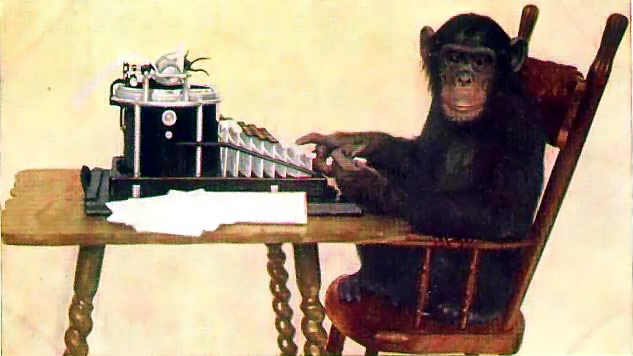 |
| Source: Wikimedia - New York Zoological Society |
Wednesday, 12 March 2014
Opening Doors with Udacity
About a week ago I restarted my attempt to learn to program. There are a lot of great and free tutorials to get you started. The one I'm following is "Introduction to Computer Science" by Udacity. It's a decent challenge, might be a bit too challenging for total noobs though. The only thing I miss is some more practice material. Still the instruction and explanation material is great.
It's basic setup is to allow you to create a basic search engine with an index, crawler etc. Today I'll start with the lessons of week four. By now all kinds of interesting things have passed by, like a sudoku checker. Of course several programming operations have already passed by like declaring statements, if statements and for loops.
Another advantage that Udacity has in my opinion is that it offers follow up courses, which are already in my agenda. All accessible anytime, anywhere. Free knowledge, to free creativity!
Who know I might even create a game of my own....
It's basic setup is to allow you to create a basic search engine with an index, crawler etc. Today I'll start with the lessons of week four. By now all kinds of interesting things have passed by, like a sudoku checker. Of course several programming operations have already passed by like declaring statements, if statements and for loops.
Another advantage that Udacity has in my opinion is that it offers follow up courses, which are already in my agenda. All accessible anytime, anywhere. Free knowledge, to free creativity!
 |
| Source: Taina B. and V. van Gogh |
Friday, 7 March 2014
Why being social and games is a match
This post will be an extender of my previous post on the Ted talk of Kelly McGonigal on different impact stress can have, depending one the way you view stress. If you see it as harmful, it becomes harmful. If you see the effects of stress (higher heart rate and higher oxygen intake) as helpful to rise to a challenge it's not harmful at all.
Right now I want to explore a second fact she highlighted in her talk. Another hormone that's produced during stress is oxytocine. It's kind of the new super hormone that neuroscientists pride around with, but still let's have a look. This hormone makes you more likely to engage in social behaviour. So stress makes you more likely to be social. Social contact during stress can give you all kinds of benefits like help, support and banding together to have a revolution. Social contact in turn releases more oxytocine, and oxytocine helps shield your body against possible negative effects of stress. It also stimulates the regeneration of heart cells, repairing damage.
One factor that is mentioned a lot as a motivator to play games is social contact. This factor totally mystified me and probably will in more or lesser degree for a long while (I'm a solo player mostly). Before the age of computer generated adversaries games were table top games and the like, demanding a human counterpart. Humans can of course be challenging to play against and with. Still humans in those times were necessary, maybe you just liked the game and other players were a prerequisite to actually play.
However a uses-and-gratifications approach to games teaches us that games can also be used making a plea for social contact as a motivator to game. We can't deny that (with a few exceptions of course) we are social animals that reap many benefits and joy from social contact. Looking a players as a whole this means that one group of players simply plays because they like playing with other players, known or unknown to them. Games always seem to lower the boundaries for reaching out to others, like a kid meeting other kids by picking up a ball. (This makes me wonder how prevalent other factors of motivation are in people that are highly motivated to play a game because of social factors.)
Still I think that social contact is not always a motivator but can just as well be a result of video games. To become good at certain games like shooters you need peers to rise against, practice against and learn from. This the players that really like shooters more likely to meet other people.
Extending on the talk by Kelly, there's another group. Games certainly can be stressful and it's impact and outcome can vary to great extremes as demonstrated by the video. Certain players will have negative effects because of stress in games and even those who don't experience them can lower their stress level even more by engaging in social contact. Games can even make you more social, who would have guessed? Certainly not conservative digi haters.
On stress: rise up to that challenge
A few days ago I came across a Ted talk by Kelly McGonigal on stress and it's effect on the human physique.
It's pretty hard to evade situations of high stress levels during your whole life. Most of us will experience at least one of the life changing events that is linked to high levels of stress. Still the effect this stress has on ones physique can differ hugely. People who view stress as bad for you tend to have constricted blood vessels , and maybe even their body (noting the common stuck muscles). This apparently is one of the explanations for the link between high blood pressure and stress. Those who do not see stress as harmful, have relaxed blood vessels, allowing the higher heart rate that occurs during periods of high stress to pump blood around unconstricted. The latter group even has the lowest change to die from all the observed groups with different stress levels and beliefs of stress.
This explains a phenomenon I experienced personally, while participating on a study of arousal by games and heart rate. My heart rate actually went down while playing an arousing game (Portal 2).
Though I must say there are numerous other activities that have proven to be stressful and had quite a malignant effect. That's an interesting side note actually.
Noted is that the positive curbing of arousal seems to occur when people view the arousal as being part of rising to a challenge. One of the key points of arousal in games is that it's part of rising to challenges. It wouldn't be such a great leap from there to saying that games might be beneficial to managing or curbing the impact of stress.
Wednesday, 5 March 2014
Confession of a Nord
It began previous summer. During a long episode of die-hard studying and personal development I promised myself to have a gaming spree. I'd get a heavy duty pc that would play games on ultra-high graphic settings and I stacked up on games during steam summersale. So it came to be.
My steam account is full of wonderful games that allow for a high level of immersion and my graduation present has an i5, 16GB ddr3 ram and 2GB ddr5 graphic card. It takes 20 seconds to boot fully, heck I can't even sit down properly before it's finished booting. Around 6 weeks dedicated to gaming went by in a breeze. I didn't even care for that for a feeling of accomplishment, I was just gone for a while.
The game I played most (by far) was Skyrim. It was a sense of true freedom I felt, and some stories truly thrilling. Till now I haven't played a game with a story as AWESOME as Chrono Trigger, but still it came close. By now I've put in over 600 hours of gameplay in total, about 15 weeks of 40 hour work. Yesterday I even did some real research concerning the lore of the game, and discovered that there were many layers of depth still to be discovered.
Last week I went to Spil Games for a job interview, it ended up not being my cup of tea. But still I was asked a question I hadn't asked myself in a while, "why are you so fascinated by games?" . After my thesis on motivation in games and this gaming spree it's time for a recap. Talking and writing about games and the interplay of game and psychology always lights a spark in me. No other medium been able to capture me so deeply while allowing me so much freedom, even if the freedom is only imagined. And that link created by the interplay of the self and a thing is truly mesmerizing to me.
Games do not simply provide a few things like emotional stimulation, no it's far more elegant. Games trick players in seeking out what they want and need. It's easier for a game so to say to entertain a media user than a movie for example. The director has to try and match the movie to what he/she things the needs of the audience are. There's no going back after the movie is shot. Some games trick players to create their own movie.
How does this interplay arise?
First of all the identification processes, each character you play, you play in your own way. The actions are not only related to the character but also to yourself. This creates a bond that is potentially far stronger than any other medium. Open world rpg's like Skyrim and probably GTA take this even farther, allowing you to fully customize your character. Stories allow for further identification and can give more depth to the character.
A second part that's very true is the challenge you feel during certain parts of the game. Games that have an unbalanced difficulty curve are not nice to play and break your personal movie. The challenge is preferrably created by different elements but mainly with cognitive challenges and puzzles (could have been better though in Skyrim) and skill challenges (like fighting) that generally requiere a certain level of mastery of the game mechanics. Skyrim allowed me to pursue the skills that I felt were challenging
A third part is arousal, from adrenaline rushes to pure joy after surviving an ordeal. I can not even count the times I was suddenly startled by a hidden enemy, or sometimes the thrill of chasing and facing something. This arousal can be experienced as a refreshing shake up from mundane life. Luckily probably, I wouldn't want that many "Ooooh shit" moments as in games.
Still something that precedes this all is the gratification of interest. People select to a certain degree their media on their interest. Though interest is a pretty vague concept in my opinion, we still follow it. Things that stimulate my fantasy are always on the top of my list.
What game did you spend a significant part of your lifetime on?
My steam account is full of wonderful games that allow for a high level of immersion and my graduation present has an i5, 16GB ddr3 ram and 2GB ddr5 graphic card. It takes 20 seconds to boot fully, heck I can't even sit down properly before it's finished booting. Around 6 weeks dedicated to gaming went by in a breeze. I didn't even care for that for a feeling of accomplishment, I was just gone for a while.
The game I played most (by far) was Skyrim. It was a sense of true freedom I felt, and some stories truly thrilling. Till now I haven't played a game with a story as AWESOME as Chrono Trigger, but still it came close. By now I've put in over 600 hours of gameplay in total, about 15 weeks of 40 hour work. Yesterday I even did some real research concerning the lore of the game, and discovered that there were many layers of depth still to be discovered.
Last week I went to Spil Games for a job interview, it ended up not being my cup of tea. But still I was asked a question I hadn't asked myself in a while, "why are you so fascinated by games?" . After my thesis on motivation in games and this gaming spree it's time for a recap. Talking and writing about games and the interplay of game and psychology always lights a spark in me. No other medium been able to capture me so deeply while allowing me so much freedom, even if the freedom is only imagined. And that link created by the interplay of the self and a thing is truly mesmerizing to me.
Games do not simply provide a few things like emotional stimulation, no it's far more elegant. Games trick players in seeking out what they want and need. It's easier for a game so to say to entertain a media user than a movie for example. The director has to try and match the movie to what he/she things the needs of the audience are. There's no going back after the movie is shot. Some games trick players to create their own movie.
How does this interplay arise?
First of all the identification processes, each character you play, you play in your own way. The actions are not only related to the character but also to yourself. This creates a bond that is potentially far stronger than any other medium. Open world rpg's like Skyrim and probably GTA take this even farther, allowing you to fully customize your character. Stories allow for further identification and can give more depth to the character.
A second part that's very true is the challenge you feel during certain parts of the game. Games that have an unbalanced difficulty curve are not nice to play and break your personal movie. The challenge is preferrably created by different elements but mainly with cognitive challenges and puzzles (could have been better though in Skyrim) and skill challenges (like fighting) that generally requiere a certain level of mastery of the game mechanics. Skyrim allowed me to pursue the skills that I felt were challenging
A third part is arousal, from adrenaline rushes to pure joy after surviving an ordeal. I can not even count the times I was suddenly startled by a hidden enemy, or sometimes the thrill of chasing and facing something. This arousal can be experienced as a refreshing shake up from mundane life. Luckily probably, I wouldn't want that many "Ooooh shit" moments as in games.
Still something that precedes this all is the gratification of interest. People select to a certain degree their media on their interest. Though interest is a pretty vague concept in my opinion, we still follow it. Things that stimulate my fantasy are always on the top of my list.
What game did you spend a significant part of your lifetime on?
Monday, 16 September 2013
Rewards and Punishment
This post is a bit behaviouristic oriented to keep it simple. Simplified; to stimulate behaviour you can follow it up with a reward, and if you want to discourage behaviour you can deliver punishment to an actor. One condition is to deliver the reward or punishment directly after the behaviour it is contingent to.
Rewards: Positive Reinforcement; I'll give you Money if you do x
This is one of the most familiar forms of reinforcement in games, rewarding good behaviour. Achievements, unlockables, points, item rewards, temporary boosts are almost always contingent to behaviour desired within a game. Most of the time these rewards are also used to make taking risks more interesting like the bonus point fruits in Pac-Man.Still the most common mistake is not clarifying to a player how they can increase their reward.

Rewards: Negative Reinforcement; I'll take your money till you do x
I never quite know why this is considered a reward, because basically you start with a reward but it diminishes before you perform a certain action. I don't recall this reward being used a lot in games, there must be some time trial fun hiding in this form of reinforcement.
Punishment: Positive Punishment; I will take your Money if you do x
This is the most straightforward form of punishment, obey the rules or be punished. If you're not shooting people in shooters, your punishment is digital death. If you pickpocket someone with witnesses, you'll be fined in some rpg's like Skyrim. Ofcourse there are other forms of punishment like the loss of money after losing a pokemon battle : ( In the end punishment also got to be contingent to behaviour, and clear. Even though you lose half your money if you lose a pokemon battle, the punishment is not clearly visualised and the contingency remains unclear.
Punishment: Negative Punishment; I will not give you money if you do x
This is a fleeting punishment and even seems like a reward with prerequisite. You are promised a reward, but won't get it if you perform a forbidden action. In certain stealth games you might lose the reward for your mission if detected. In an RPG you might break a piece of important armor to be looted from a boss if you are careless in battle. But in the end this form of punishment is not implemented a lot (or is it?).
Well next time I might combine these forms of behaviour reinforcements or speculate on their relation to intrinsic motivation. Game on.
Literature:
http://psychology.about.com/od/behavioralpsychology/a/introopcond.htm
Rewards: Positive Reinforcement; I'll give you Money if you do x
This is one of the most familiar forms of reinforcement in games, rewarding good behaviour. Achievements, unlockables, points, item rewards, temporary boosts are almost always contingent to behaviour desired within a game. Most of the time these rewards are also used to make taking risks more interesting like the bonus point fruits in Pac-Man.Still the most common mistake is not clarifying to a player how they can increase their reward.

Rewards: Negative Reinforcement; I'll take your money till you do x
I never quite know why this is considered a reward, because basically you start with a reward but it diminishes before you perform a certain action. I don't recall this reward being used a lot in games, there must be some time trial fun hiding in this form of reinforcement.
Punishment: Positive Punishment; I will take your Money if you do x
This is the most straightforward form of punishment, obey the rules or be punished. If you're not shooting people in shooters, your punishment is digital death. If you pickpocket someone with witnesses, you'll be fined in some rpg's like Skyrim. Ofcourse there are other forms of punishment like the loss of money after losing a pokemon battle : ( In the end punishment also got to be contingent to behaviour, and clear. Even though you lose half your money if you lose a pokemon battle, the punishment is not clearly visualised and the contingency remains unclear.
Punishment: Negative Punishment; I will not give you money if you do x
This is a fleeting punishment and even seems like a reward with prerequisite. You are promised a reward, but won't get it if you perform a forbidden action. In certain stealth games you might lose the reward for your mission if detected. In an RPG you might break a piece of important armor to be looted from a boss if you are careless in battle. But in the end this form of punishment is not implemented a lot (or is it?).
Well next time I might combine these forms of behaviour reinforcements or speculate on their relation to intrinsic motivation. Game on.
Literature:
http://psychology.about.com/od/behavioralpsychology/a/introopcond.htm
Tuesday, 10 September 2013
The art of Collecting
One of the game mechanics that is used both in games and gamification is collecting. Collecting has such a nostalgic feeling, between the ages of 9 and 12 my collecting behavior exploded. I grabbed whatever I could get and arranged it in a hundred different ways (arranging is important). I still have coins, pottery, gems, minerals and hundreds of stamps lying around from that period. Even games I play now want me to collect, for example in Skyrim (I've played a bit to much lately) I collect books with ingame lore, within the game.
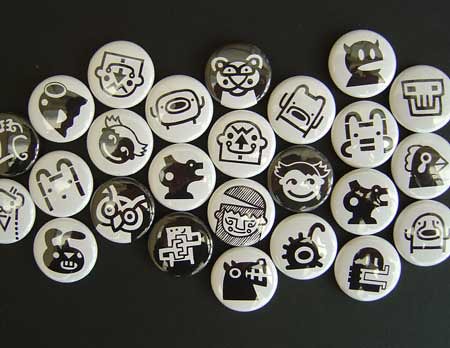
However every forum seems to spawn badges to collect. Mostly they are so uninspiring, that I wonder why they bother to put them there in the first place. Badges used to mean something, like military medals or boyscout awards. Basically they have to be really cool (why only make a picture badge on the internet if you can make them interactive?).
Interestingly collecting behavior gets triggered from the age of 9 or a bit before. It's an emerging form of behavior in the concrete operational stage of human development.The brain is developing rapidly around this age. Collecting fits the demand for stimuli very well. First of all it stimulates memory strategies of organizing, kids can rearrange their marbles in hundreds of different categories. The ability of selectivity developing, by discerning one collection piece from others. Collecting certain tokens also increases control of cognitive processes by training to ignore distractions. It's quite a feat to select a blue cat eye marble from a pile of mixed ones. Even at later stages of life this may be quite interesting, Lego-holics seem to keep selecting and rearranging the cubes. What about the hoby clock-maker? Collecting parts of machines just add layers of complexity to overcome.
So collecting badges can be much more than just collecting dull pictures, they can stimulate development of several kinds of behavior.
Literature
 |
| Flickr: What What |
Interestingly collecting behavior gets triggered from the age of 9 or a bit before. It's an emerging form of behavior in the concrete operational stage of human development.The brain is developing rapidly around this age. Collecting fits the demand for stimuli very well. First of all it stimulates memory strategies of organizing, kids can rearrange their marbles in hundreds of different categories. The ability of selectivity developing, by discerning one collection piece from others. Collecting certain tokens also increases control of cognitive processes by training to ignore distractions. It's quite a feat to select a blue cat eye marble from a pile of mixed ones. Even at later stages of life this may be quite interesting, Lego-holics seem to keep selecting and rearranging the cubes. What about the hoby clock-maker? Collecting parts of machines just add layers of complexity to overcome.
So collecting badges can be much more than just collecting dull pictures, they can stimulate development of several kinds of behavior.
Literature
Bukatko, D. (2007). Child and adolescent development: A chronological approach. Houghton Mifflin College Div.
Saturday, 7 September 2013
Highscores indepth
Games and education should go together like milk and cookies, maybe demonstrated by the recent buzz on educational games. After White (1959) wrote his piece to reclaim motivation from behavioralists, a lot of research was conducted on motivation in education. One of the media that is researched quite a bit in relation to motivation are (video) games. So a lot of recent work on motivation in video games is actually building on previous education research.
One of the game elements that's often misunderstood is the place of highscores. Ever since 1959 has game theory been rejected as the sole explanator for behavior contingent to points gained after an action.
The problem can be detected easily using a model of limited effects, as used in communication science.
Behavioral psychologists mostly use very simple models that allow them to expect behavior after a certain stimulus. But these models will always fail to predict reactions of first introduction to a stimulus like a game and learning behavior thereafter, because our environment is complex and we don't do everything just for arousal (what use would such a big brain be). Still our social worlds are grey, so even behaviouristic prediction models can predict a percentage of the outcome of actions.
Awarding points to players is one such problem. Mostly points are rewarded after success in a game (task contingent), or after taking a gamble (risk contingent). I will only talk about the task contingent point rewards here. These points add as a player progresses in the game. Some players see these points as rewards for their action and are driven by it to play more and more. A lot of games reward players early on to stimulate playing and make these points harder to get later in the game. Other players see these points as a proof of personal skill and use them to measure their own competence (maybe due to a lack of other feedback). While the first kind of player is theorized to be mostly aroused by the points and gaining points, the second kind of player is not aroused by the points but finds fulfilment in rising above the challenge to their skill. Even though you might think that both these types of players would end up equally skilled, the first type of player uses a lot of shortcuts and other tricks to increase their points without improving skill. The intrinsically motivated player is more likely to attain a higher skill level, and somehow also enjoyment. [Note to self; this enjoyment might be higher because reaffirmation of skill refers back to oneself and might be more fun because of that]
But how do you point your player in a certain direction? Well for a large part you are powerless as game designer, you can't manipulate the tendencies of people to be motivated by intrinsic or extrinsic factors and you can only try to invoke their interest with a cool demo or trailer. Still there is an important difference between the two kinds of players. Players that relate points to intrinsic motivation see them as informational. This informational character can be emphasized. You can couple points with automated vocal praising to stimulate intrinsic motivation, with quotes like "you're great", "multi-kill", "wow!" Points can also be divided into categories that are related to specific actions in a skill menu and it's also possible to simply award more points to skill related actions like in Skyrim. Anyway, the points have to be related to specific actions while gaining them with clear feedback to stimulate intrinsic motivation. Pinball machines for examples seem to give you points for everything but mostly do not convey specifics, like bumber x is 10 points ans bumber y is 100 points. However some will still remain motivated by the points themselve, humans are not machines. Luckily so, else we wouln't experience the joy of games.
Literature:
One of the game elements that's often misunderstood is the place of highscores. Ever since 1959 has game theory been rejected as the sole explanator for behavior contingent to points gained after an action.
The problem can be detected easily using a model of limited effects, as used in communication science.
"Who says What to Whom through Which channel with What effect?"
Behavioral psychologists mostly use very simple models that allow them to expect behavior after a certain stimulus. But these models will always fail to predict reactions of first introduction to a stimulus like a game and learning behavior thereafter, because our environment is complex and we don't do everything just for arousal (what use would such a big brain be). Still our social worlds are grey, so even behaviouristic prediction models can predict a percentage of the outcome of actions.
Awarding points to players is one such problem. Mostly points are rewarded after success in a game (task contingent), or after taking a gamble (risk contingent). I will only talk about the task contingent point rewards here. These points add as a player progresses in the game. Some players see these points as rewards for their action and are driven by it to play more and more. A lot of games reward players early on to stimulate playing and make these points harder to get later in the game. Other players see these points as a proof of personal skill and use them to measure their own competence (maybe due to a lack of other feedback). While the first kind of player is theorized to be mostly aroused by the points and gaining points, the second kind of player is not aroused by the points but finds fulfilment in rising above the challenge to their skill. Even though you might think that both these types of players would end up equally skilled, the first type of player uses a lot of shortcuts and other tricks to increase their points without improving skill. The intrinsically motivated player is more likely to attain a higher skill level, and somehow also enjoyment. [Note to self; this enjoyment might be higher because reaffirmation of skill refers back to oneself and might be more fun because of that]
But how do you point your player in a certain direction? Well for a large part you are powerless as game designer, you can't manipulate the tendencies of people to be motivated by intrinsic or extrinsic factors and you can only try to invoke their interest with a cool demo or trailer. Still there is an important difference between the two kinds of players. Players that relate points to intrinsic motivation see them as informational. This informational character can be emphasized. You can couple points with automated vocal praising to stimulate intrinsic motivation, with quotes like "you're great", "multi-kill", "wow!" Points can also be divided into categories that are related to specific actions in a skill menu and it's also possible to simply award more points to skill related actions like in Skyrim. Anyway, the points have to be related to specific actions while gaining them with clear feedback to stimulate intrinsic motivation. Pinball machines for examples seem to give you points for everything but mostly do not convey specifics, like bumber x is 10 points ans bumber y is 100 points. However some will still remain motivated by the points themselve, humans are not machines. Luckily so, else we wouln't experience the joy of games.
Literature:
Deci, E. L., & Ryan, R. M. (1985). Intrinsic
motivation and self determination in human behavior.
New York: Plenum.
Lepper, M. (1983). Extrinsic Reward and Intrinsic
Motivation: Implications for the Classroom. In Levine, J.M. &
Wang M.C. (Eds.), Teacher and Students
Perceptions: Implications for Learning. New
York: Lawrence Erlbaum
White, R. W. (1959). Motivation reconsidered: the concept of competence. Psychological review, 66(5), 297.
Friday, 6 September 2013
Trading Stocks: the game
Lately I have been wondering if it is even possible to discern games from regular activities. Maybe it's just a state of mind while performing a task, making it exciting and challenging. It all begin with a crisis, an economic crisis. All this attention economists get made me wonder what kind of voodoo was going on in their datacenters, well can be fun I know that now.
A tv-channel advertised a free stock trading simulator, marketed as stocktrading game, and I must say it was quite fun. I started off with 100k of virtual Euro's and was allowed to invest it in stocks, options, indexes, resource futures and more. All investment options are linked to the rates in reality, and during the game you have the opportunity to do attend online masterclasses and small vid-courses on stock trading.

I thought it was quite fun, even though I once misunderstood the meaning of going short on a stock and lost thousands. Reading on stock trading was quite interesting, but also very sobering. Stock exchanges are a gathering of gambling, mass psychology and agenda setting. If I would trade with my own money? Well maybe after a bit more practice (40% interest in 8 weeks was not bad ^^).
Still there were no game elements added, the only element added was a leaderboard for short term profit. So here's the dilemma, I enjoyed the activity but does that make a game? There were rules and patterns to shape my behavior and reward points, but maybe a different perspective is needed.
Some parents have the amazing ability to make everything seem like a game to their children, even clearing away toys. But maybe here's where the secret lies, perspective. A lot of games can simply be analyzed as a series of actions strongly guided by mathematical principles, but an analysis like this is devout of user engagement. Games are fun because they satisfy our needs for challenge, arousal, social interaction and maybe even fantasy. However these factors are all very relative and related to our personal interests. So I would say that no mechanical discription of what games are would suffice, because it would ignore the state of mind needed to make a set of rules into a game. Mysteries, mysteries, well I'd better make a game of doing my laundry.
A tv-channel advertised a free stock trading simulator, marketed as stocktrading game, and I must say it was quite fun. I started off with 100k of virtual Euro's and was allowed to invest it in stocks, options, indexes, resource futures and more. All investment options are linked to the rates in reality, and during the game you have the opportunity to do attend online masterclasses and small vid-courses on stock trading.

I thought it was quite fun, even though I once misunderstood the meaning of going short on a stock and lost thousands. Reading on stock trading was quite interesting, but also very sobering. Stock exchanges are a gathering of gambling, mass psychology and agenda setting. If I would trade with my own money? Well maybe after a bit more practice (40% interest in 8 weeks was not bad ^^).
Still there were no game elements added, the only element added was a leaderboard for short term profit. So here's the dilemma, I enjoyed the activity but does that make a game? There were rules and patterns to shape my behavior and reward points, but maybe a different perspective is needed.
Some parents have the amazing ability to make everything seem like a game to their children, even clearing away toys. But maybe here's where the secret lies, perspective. A lot of games can simply be analyzed as a series of actions strongly guided by mathematical principles, but an analysis like this is devout of user engagement. Games are fun because they satisfy our needs for challenge, arousal, social interaction and maybe even fantasy. However these factors are all very relative and related to our personal interests. So I would say that no mechanical discription of what games are would suffice, because it would ignore the state of mind needed to make a set of rules into a game. Mysteries, mysteries, well I'd better make a game of doing my laundry.
~I'm busy doing the fishstick. It's a very delicate state of mind~
Sheogorath, Skyrim
Saturday, 4 May 2013
OE vanaf de zijlijn
Sinds ik mij ben gaan verdiepen in
educatieve games ben ik in aanraking gekomen met verschillende
onderwerpen in het debat rondom veranderingen in het onderwijs. Net
als veel anderen stuurde ik vorig jaar een motivatie tekst in om naar
TedxAmsterdamED te kunnen gaan. Daar was ik één van de jongste
aanwezigen, aanwezigen die ook daadwerkelijk nog aan ons
educatie stelsel overgeleverd zijn.
Tijdens dit evenement was ik getuige
van Claire Boonstra's verhaal, waar zij tot tranen aan toe vertelde
over haar nieuwe levensdoel om positieve verandering in het onderwijs
te bewerkstelligen, na haar desillusie van het CEO-schap.
Ondertussen heeft zij met anderen Operation Education opgericht, een
organisatie met daadkrachtige naam dat oplossingen wil zoeken voor
mogelijke problemen in het onderwijs door te laten zien dat het ook
anders kan.

Persoonlijk vond ik het dapper van
haar om te erkennen dat ondanks de economische macht en prestige van
een gerenomeerd CEO, persoonlijke voldoening nog ver te zoeken kan
zijn. Ik had me zelfs voorgenomen om een brief te sturen met een
blijk van waardering voor haar stap en mijn visie op het onderwijs.
Echter is mijn visie nog in ontwikkeling. Bij een onderwerp dat
invloed kan hebben op de levensloop van vele individuen is naar mijn
mening voorzichtigheid geboden.
Echter zie ik in gedachten een hype
curve ontwikkelen rondom deze organisatie, die mij lichtelijk
sceptisch maakt over het debat rondom OE ondanks de goede
bedoelingen. Sir Ken Robertson vertelde het al; educatie raakt ons
diep en persoonlijk. Een organisatie zoals OE zal mensen aantrekken
die het beste voor hebben met kinderen, docenten en de maatschappij
als geheel. Sommigen zullen meer weten, of meer ideeën hebben die
aanslaan dan anderen. Maar het zal ook mensen aantrekken die zich
diep benadeeld voelen door het onderwijs, mensen met economische
belangen, mensen die hun verhaal van frustratie willen vertellen,
personen die simpelweg denken dat ze weten wat beter is voor
kinderen, oftewel mensen met een verscheidenheid aan motieven en
gezichtspunten.
Deze mengeling van gezichtspunten
biedt natuurlijk kansen maar ook knelpunten. De verhalen van
ontevredenen geven een blik op wat er fout kan gaan in het systeem.
Maar welk gewicht moet je bijvoorbeeld toekennen aan de frustratie
van een ouder na een aanvaring met een enkele leraar, met de blik
gericht op het grote geheel? Persoonlijk mis ik sterk de stem van
leraren, leerlingen en ceo's die wel tevreden zijn met het huidige
systeem, of in ieder geval goede kanten benoemen. Kun je het ze
kwalijk nemen dat dit nu niet gedaan wordt? Als zij zich mengen in de
discussie zullen zij het op moeten nemen tegen een heel scala aan
geëmotioneerde “tegenstanders”. Begrijp me niet verkeerd, de
insteek van OE vind ik geweldig, maar met een idee alleen kom je er
niet.
Zonder Norm; nog Goed nog Slecht
Laatst sprak ik een vriend van me na
meer dan 13 jaar. We hadden elkaar niet meer gesproken sinds de
basisschool. Op de basisschool was ik qua rapport de “slimste”
van de klas en hij was gediagnosticeerd als hoogbegaafd. Dertien jaar
later noemde hij zijn hoogbegaafdheid een handicap doordat het hem
veel moeilijkheden heeft gegeven in het onderwijs, met als gevolg een
gebrek aan maatschappelijk erkende diploma's. Ik kon de grenzen van
het onderwijs deels tolereren en pikte hopelijk nog wat kennis mee,
met een beetje geluk ontvang ik later dit jaar mijn maatschappelijk
erkende master diploma.
Het onderwijs heeft zeker zijn mindere
kanten, maar het idee dat een systeem zoals het onderwijs zich in
stand zou houden zonder goede kanten vind ik echter naïef. Mijn
onderwijs heeft mij handvaten gegeven om de wereld van meerdere
kanten te bekijken. Het heeft me inzicht gegeven in mens,
maatschappij en de vele beweegredenen. Ik zie kansen, structuren en
verbanden die mijn leven verrijken en mij voldoening geven. Er zou
voor veel mensen best wel eens goede kanten aan het huidig onderwijs
kunnen zitten.
Robertson noemt hervormingen in het
onderwijs echter niet genoeg en roept zelfs op tot een transformatie
naar een geheel ander systeem. Het idee dat het ene systeem kan
worden vervangen door een ander systeem spreekt van de gedachte dat
de mens en maatschappij maakbaar zijn. Deze maakbaarheid wordt
vervolgens van een richting voorzien doormiddel van normen uit zo'n
systeem. Terwijl dit normatieve karakter van het onderwijs nou juist
een deel van het probleem is dat hij bespeurt, bijvoorbeeld met de
normen die worden gesteld in onderwijs toetsen. Een tegenstelling is
geboren.

Wat in ieder geval duidelijk wordt
hieruit, is dat onderwijs inherent normatief is. Ongeacht de vorm van
het onderwijs systeem zullen er normen worden gesteld over het soort
ontwikkeling dat een vorm van onderwijs voor ogen heeft. Of het zich
nou limiteerd tot basisvaardigheden lezen en rekenen of zich ook
richt op het volgen van interesses. Het is naar mijn mening
belangrijk om in een dergelijk systeem altijd te realiseren dat je
normatief werkt en dat men waakzaam is voor de gevolgen van deze
normen. Normen zullen nooit 100% dekkend zijn en daar is ruimte voor
nodig. Maar onderwijs maakt nou eenmaal een belangrijk deel uit van
de socialisering van individuen tot de maatschappij, de vorm kan
altijd worden bekritiseerd.
Een aantal termen in het debat
-Creativiteit
Robertson legt zijn normatief
zwaartepunt voornamelijk bij het belang van creativiteit in het
onderwijsstelsel en hecht hier een even groot belang aan als
geletterdheid. Hoewel creativiteit moeilijk te definieren is, lijkt
het inherrent verbonden aan flexibel denken en het los laten van
vaste hokjes. Als ik het goed begrijp hecht Robertson waarde aan
creativiteit, omdat het individuen in staat stelt om in deze
veranderende wereld oplossingen te kunnen verzinnen voor problemen.
Het is mij echter onduidelijk of hij
dit belang voornamelijk ziet voor het individu, voor de maatschappij
of allebei. Creativiteit definieert hij als; het creëren van
originele ideën die van waarde zijn. Creativiteit direct verbinden
aan waarde lijkt me in ieder geval een buzzkill, de waarde van een
idee hoeft zeker niet duidelijk of relevant te zijn om onder
creativiteit te worden geschaard. De termen “waarde”, “
originaliteit” en “creëren” zijn in ieder geval vrij
problematische woorden die ieder meerdere boeken verdienen om te
definieren.
Waar de uiting van creativiteit in
ieder geval continu mee lijkt te botsen zijn gestandaardiseerde
lesmethoden en toetsen. Als men erkent dat onderwijs normatief is
moet in ieder geval erkent worden dat deze normen deels kunstmatig
zijn. Een antwoord is alleen goed of fout in vergelijking met een
norm en een norm hoeft niet sluitend te zijn. Hetzelfde geldt voor
methoden als geheel, ontwikkeling is alleen voorspoedig vergeleken
met de norm. Ook deze norm hoeft niet sluitend te zijn. Hierdoor zal
er altijd ruimte over moeten worden gelaten in lesmethodes en
alternatieven voor een mate van creativiteit.
Verder durf ik best te stellen dat de
mogelijkheid om jezelf te ontplooien door middel van creativiteit en
eigen verantwoordelijkheid, wonderen kan doen voor iedereen. Dit
stimuleert namelijk een menselijke basisbehoefte aan meesterschap
over zelf en het bouwen van competentie met alle positieve gevolgen
van dien. Dit gaat vaak gepaard met erkenning door derden en de
positieve feedback die dit geeft.
-Talent
Een ander punt dat continu naar voren
wordt gebracht is het idee dat kinderen/personen bundeltjes talenten
zijn. Deze talenten kunnen vervolgens tot bloei komen op de juiste
voedingsbodem. De onderbouwing van dit idee wordt echter vaak
achterwege gelaten. Terugkomend op het eerste probleem, een talent
kan alleen aangeduid worden als je hier een norm voor hebt. Het is
een nog groter probleem om de term talent uberhaubt wetenschappelijk
te onderbouwen, ook hier kan een boek over worden geschreven.
Los hiervan komt het idee dat personen
aangeboren talenten/aanleg voor iets hebben aan de nature kant van
het onderwijsdebat vandaan. Meerdere experimenten hebben echter
aangetoond dat onze vaardigheden op veel vlakken kunnen worden
gemanipuleerd en dat talent hier weinig aan hoeft bij te dragen. Een
docent zelf heeft bijvoorbeeld grote invloed op reken- en
taalvaardigheden. Mocht de sociale omgeving van een persoon bepaalde
vaardigheden stimuleren dan is het waarschijnlijk dat zij deze in
ieder geval verder ontwikkelen, hier is talent niet voor nodig.
Misschien is het zelfs fijner interesses na te streven dan talen nog veel fijner, dan staat de wereld echt voor ons
open, in plaats van gevangen te zijn door een beperkt aantal
talenten.

Het ontwikkelen van een vaardigheid
onder volwassenen vergt echter ingewikkeldere uitleg. Na jaren te
zijn blootgesteld aan verschillende nature/nurture factoren is het op
zo'n punt zo goed als onmogelijk te achterhalen of zoiets as talent
bestaat. Ook op dit punt vallen er zeker TED filmpjes of andere
docu's te vinden over het verbazingwekkende aanpassingsvermogen van
mensen die hun kindertijd ver zijn gepasseerd.
Er zou geen probleem zijn om het idee
na te streven van “interesses ontwikkelen”. Interesses zijn vrij
neutraal op het gebied van nature/nurture en niet zo beperkend.
Onderwijs zou interesses kunnen helpen ontplooien en daarbij
nieuwsgierigheid te stimuleren. Deze drang naar iets nieuws en het
meester maken van een onderwerp doet gelijk afbreuk aan het “nee,
dat is fout” patroon en “jij doet wat wij willen” patroon
voortgebracht door sommige normen.
-Mismatch
Men beweert soms dat er een mismatch is
tussen de individuen die het onderwijs aflevert en de wensen van het
bedrijfsleven. Nederland heeft echter een (jeugd)werkloosheidscijfer
dat relatief laag is in de westerse wereld. Wellicht dat deze mening
betrekking heeft op technologiebedrijven die moeilijkheden hebben om
gekwalificeerd personeel te vinden (programmeurs). Deze sector
ontwikkelt zich echter zo snel dat het niet zo verwonderend is dat
het huidige onderwijssysteem de vraag niet kan bijhouden. Er zijn ook
andere sectoren die meer personeel zouden willen, in de komende jaren
is er net zo goed een groeiende vraag naar hoog gekwalificeerde
leraren, stucadoors, timmerlieden, tomatenplukkers etcetera. Het is
echter te kort door de bocht om grote veranderingen in het
onderwijssysteem hiervoor nodig te achten.
Op een mogelijk gebrekkig
aanpassingsvermogen van het onderwijsstelsel kan natuurlijk kritiek
worden geleverd, echter is het belangrijk de specifieke oorzaken
bloot te leggen om tot een oplossing te komen.
Volgens Robertson hebben de behoeften
van de maatschappij in het industriële tijdperk aanzet gegeven tot
publiek onderwijs en de huidige hiërarchie in aanzien tussen
wetenschappen. Het is dus maar zeer de vraag of onderwijs zich überhaupt zou moeten vormen naar de wens van commercie gezien de
mogelijke veel bredere normatieve uitwerking. Zo zou iemand die zijn
interesse voor programmeren heeft ontplooit zich wellicht veel
gelukkiger voelen als bierbrouwer in plaats gestuurd te worden tot
programmeur.
Wees voorzichtig in de
porseleinkast...
OE is naar mijn mening een geweldig
initiatief om mensen te bewegen tot nadenken over het onderwijs.
Veranderingen komen wellicht later, maar eerst de basis. Wat streeft
het na? Oké, een school komt niet door de keuringsdienst van
onderwijs maar wat zegt dit over de keuringsdienst? Is zo'n
keuringsdienst nuttig om evangelistische thuisonderwijspraktijken te
voorkomen b.v.? Wat moet nou echt gekeurd worden?
Via OE krijgen veel personen een
platform om hun mening aan een breder publiek te presenteren. Maar
het huidige onderwijs lijkt tot nu toe nog geen vertegenwoordigde
stem te hebben. Zonder deze vertegenwoordiging zou het debat rond OE best
eens vertekend kunnen worden door te veel ja-knikkers. Een functionele blik op wat "is" kan ook geen kwaad. Wat is het nut van de
normatieve categoriën zoals vmbo, havo en vwo in ons onderwijs
bijvoorbeeld?

Het lijkt goed te gaan met OE, de
beweging krijgt steeds meer momentum. Daar ben ik helemaal voor,
zolang het geen olifant in de porseleinkast wordt. Verandering
aandragen is prima, maar wees spaarzaam met verwijten naar het huidige systeem
en haar vertegenwoordigers. Ook nu zetten talloze leraren, intern
begeleiders, ict'rs en directeuren zich in voor hun leerlingen. Met
te veel vinger wijzen, zoals soms via OE gedaan wordt, zouden sommige
porseleinen kopjes barstjes kunnen gaan vertonen
Saturday, 8 December 2012
Tuesday, 6 November 2012
I will have more Fun
After having written some posts I kind of forgot an important think; writing should have some entertainment. Yes, this blogg is set up for my self-interest in exploring serious games, educational games and all non-code facets that surrounds them but I myself got kind of bored with my own writing.
Therefore Nyan Cat to shake things up!
Therefore Nyan Cat to shake things up!
Sunday, 7 October 2012
The gamification thing
Okay, I've been kind of slacking on my posting lately. I've come across Gamification.org once in a while but have never take a good look around. However it looks quite disappointing from my scientific perspective so I think I'll rewrite a large part of it in the coming months.
Let's deal with achievements first:
Achievements are usually locked till a certain action unlocks it, a form of reward. Most often this is used in gamification in the form of a token. You can have multiple kinds of tokens used in the same game like coins, items and abilities. One defining feature of achievements is that they are a reward after fulfilling a fixed criterium. This is opposed to (partly) random token drops or random rewards in any other way.
They may be gained in every form of play like single player, cooperative play, competition or a combination.
However achievements can mean something different for each player for example; some simply want the token, some collect the tokens and some don't even care about the token.
Achievements can be implemented in a myriad of ways most of them are rewards after using a certain skill (task-contingent).
-It may be a reward of the improvement of skill compared to one's previous state.
-It may be a reward of improvement of skill compared to a fixed state.
-It may be a reward after displaying the skill in a certain way (efficiency, frequency etc.).
Other achievements can be linked to behaviour like attendance, performing a certain action (like the finishing the tutorial) and good sportsmanship. However compared to skill display, these behaviours are only displayed little. Behaviour specific achievements may therefore contain very rare achievements.
These achievements can be controlling a player's thoughts, this will decrease the skill of this player and happens mostly in case of harsh direct competition. Achievements can also be used as information by players to measure their skill level. Highly motivated players are theorised not to be under the influence of achievements and might not need them as an information source. This is related to their two main displayed motivation characteristics; desire to be good and the desire to become better.
Adiós, more next time!
Let's deal with achievements first:
Achievements are usually locked till a certain action unlocks it, a form of reward. Most often this is used in gamification in the form of a token. You can have multiple kinds of tokens used in the same game like coins, items and abilities. One defining feature of achievements is that they are a reward after fulfilling a fixed criterium. This is opposed to (partly) random token drops or random rewards in any other way.
They may be gained in every form of play like single player, cooperative play, competition or a combination.
However achievements can mean something different for each player for example; some simply want the token, some collect the tokens and some don't even care about the token.
Achievements can be implemented in a myriad of ways most of them are rewards after using a certain skill (task-contingent).
-It may be a reward of the improvement of skill compared to one's previous state.
-It may be a reward of improvement of skill compared to a fixed state.
-It may be a reward after displaying the skill in a certain way (efficiency, frequency etc.).
Other achievements can be linked to behaviour like attendance, performing a certain action (like the finishing the tutorial) and good sportsmanship. However compared to skill display, these behaviours are only displayed little. Behaviour specific achievements may therefore contain very rare achievements.
These achievements can be controlling a player's thoughts, this will decrease the skill of this player and happens mostly in case of harsh direct competition. Achievements can also be used as information by players to measure their skill level. Highly motivated players are theorised not to be under the influence of achievements and might not need them as an information source. This is related to their two main displayed motivation characteristics; desire to be good and the desire to become better.
Adiós, more next time!
Saturday, 22 September 2012
Task Motivation a starting point for game research
During my internship I wrote a summary of literature on task motivation specifically to be applied in research on games and learning. In the coming weeks I'll post translated parts of the theory section online for those interested. It serves to be a solid guiding framework into motivation to engage different elements in games. This in turn can be measured.
Motivation
to engage a task can have both an intrinsic and an extrinsic
component (Lepper, Corpus & Iyengar, 2005). The intrinsic
component stimulates task engagement out of a desire for challenge,
pleasure and interest (Lepper et al, 2005). This is called intrinsic
motivation.
The
extrinsic component stimulates task engagement out of a desire for
external reward or dodging punishment. This is called extrinsic
motivation. If there's no internal or external stimulus to engage a
task it's called amotivation (Deci & Ryan, 1985).
These motivation components are non-homeostatic
drive-forces to engage a task (Gorman, 2004, White, 1959), motivation
that holds no relation to direct physical needs like hunger and
thirst. The concepts of intrinsic and extrinsic motivation have
originated from the comments of White (1959) on the drive theories of
motivation (Deci & Ryan, 1985; Harter, 1978; White, 1959). The
drive theories of motivation ascribe task motivation and desire to
learn to a desire for external rewards or dodging of punishment.
White (1959) used a variety of sources to show that external stimuli
alone, are inadequate to explain the full range of human behaver like
discovery, play, and a desire to deal with one's surroundings
competently.
White
(1959) proposed that many behaviors are explained better from a
desire to deal with one's surroundings competent and effectively.
Harter (1978, 1981), Deci and Ryan (1985) and others after him have
operationalised the concepts White (1959) proposed too subsequently
test it. His critique has since been tested and supported with
evidence. A large part of this research has been done in the context
of children and their development in education, some even
longitudinal.
Both intrinsic and
extrinsic motivation have their place during the development of
children. Though time after time research has shown a correlation
between school results and intrinsic motivation for school (Lepper
et. al, 2005). Partly because of this, intrinsic motivation is seen
as superior to extrinsic motivation. However if a child is amotivated
to engage in a certain task at school, rewards may be applied to
increase task motivation through extrinsic motivation (Deci &
Ryan, 1985, pp. 263-264).
Literature
Deci,
E. L., & Ryan, R. M. (1985). Intrinsic
motivation and self determination in human behavior.
New York: Plenum.
Deci,
E. L., & Ryan, R. M. (1987). The Support of Autonomy and the
Control of Behavior. Journal
of Personality and Social Psychology, 53,
1024-1037.
Eisenberger,
R., Pierce, W. D., Cameron, J. (1999). Effects of Reward on Intrinsic
Motivation- Negative, Neutral, and Positive: Comment on Deci,
Koestner, and Ryan. Psychological Bulletin, 125, 677-691.
Gorman,
P. (2004). Motivation
and Emotion. New
York: Routledge.
Harter,
S. (1981). A new self-report scale of intrinsic versus extrinsic
orientation
in the classroom: Motivational and informational components.
Developmental
Psychology, 17,
300–312.
Lepper,
M. (1983). Extrinsic Reward and Intrinsic Motivation: Implications
for the Classroom. In Levine, J.M. & Wang M.C. (Eds.), Teacher
and Students Perceptions: Implications for Learning.
New York: Lawrence Erlbaum
Lepper,
M. R., Corpus, J. H., & Iyengar, S. S. (2005). Intrinsic and
extrinsic motivational orientations in the classroom: Age differences
and academic correlates. Journal
of
Educational
Psychology, 97(2),
pp.184–196.
White,
R.W.(1959). Motivation reconsidered: The concept of competence.
Psychological Review, 66(5).
Sunday, 9 September 2012
Why you shouldn't focus on age adaptivity.
Last week I started my master study youth and media. It's quite intensive so the amount of posts will drop a bit. Here we go again.
Some serious games for children try to adapt the skill level of their game linked to age. However age is not a dependent variable in this equation.
From the age of 4 and up the difference of cognitive skills for each group begins to vary considerably. When turning 8 about 20 percent of children is on the level of an average 9 year old. There is a similar tendency pointing down.
Social skills are already varying considerably around that age. So media wisdom games have to take this into account as well.
Saturday, 1 September 2012
Back in Action
Yeah, finally back in action.
Did you know that the difference between intrinsic and extrinsic motivation seems to imply a shift in salience from taskcentered to rewardcentered?
Tomorrow will be the start of a journey in the curious world of motivation, till then....

Did you know that the difference between intrinsic and extrinsic motivation seems to imply a shift in salience from taskcentered to rewardcentered?
Tomorrow will be the start of a journey in the curious world of motivation, till then....

Subscribe to:
Posts (Atom)