Showing posts with label achievements. Show all posts

Monday, 16 September 2013

Rewards and Punishment

This post is a bit behaviouristic oriented to keep it simple. Simplified; to stimulate behaviour you can follow it up with a reward, and if you want to discourage behaviour you can deliver punishment to an actor. One condition is to deliver the reward or punishment directly after the behaviour it is contingent to.


Rewards: Positive Reinforcement; I'll give you Money if you do x
This is one of the most familiar forms of reinforcement in games, rewarding good behaviour. Achievements, unlockables, points, item rewards, temporary boosts are almost always contingent to behaviour desired within a game. Most of the time these rewards are also used to make taking risks more interesting like the bonus point fruits in Pac-Man.Still the most common mistake is not clarifying to a player how they can increase their reward.


Rewards: Negative Reinforcement; I'll take your money till you do x
I never quite know why this is considered a reward, because basically you start with a reward but it diminishes before you perform a certain action. I don't recall this reward being used a lot in games, there must be some time trial fun hiding in this form of reinforcement.

Punishment: Positive Punishment; I will take your Money if you do x
This is the most straightforward form of punishment, obey the rules or be punished. If you're not shooting people in shooters, your punishment is digital death. If you pickpocket someone with witnesses, you'll be fined in some rpg's like Skyrim. Ofcourse there are other forms of punishment like the loss of money after losing a pokemon battle : (  In the end punishment also got to be contingent to behaviour, and clear. Even though you lose half your money if you lose a pokemon battle, the punishment is not clearly visualised and the contingency remains unclear.

Punishment: Negative Punishment; I will not give you money if you do x
This is a fleeting punishment and even seems like a reward with prerequisite. You are promised a reward, but won't get it if you perform a forbidden action. In certain stealth games you might lose the reward for your mission if detected. In an RPG you might break a piece of important armor to be looted from a boss if you are careless in battle. But in the end this form of punishment is not implemented a lot (or is it?).

Well next time I might combine these forms of behaviour reinforcements or speculate on their relation to intrinsic motivation. Game on.

Literature:
http://psychology.about.com/od/behavioralpsychology/a/introopcond.htm

Tuesday, 10 September 2013

The art of Collecting

One of the game mechanics that is used both in games and gamification is collecting. Collecting has such a nostalgic feeling, between the ages of 9 and 12 my collecting behavior exploded. I grabbed whatever I could get and arranged it in a hundred different ways (arranging is important). I still have coins, pottery, gems, minerals and hundreds of stamps lying around from that period. Even games I play now want me to collect, for example in Skyrim (I've played a bit to much lately) I collect books with ingame lore, within the game.


Flickr: What What
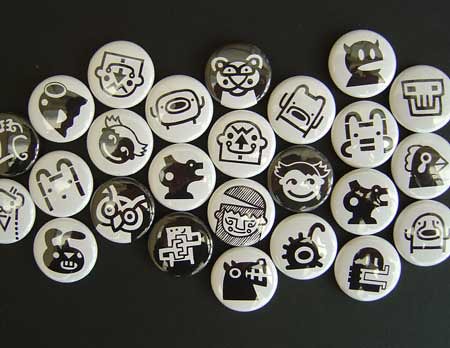
However every forum seems to spawn badges to collect. Mostly they are so uninspiring, that I wonder why they bother to put them there in the first place. Badges used to mean something, like military medals or boyscout awards. Basically they have to be really cool (why only make a picture badge on the internet if you can make them interactive?).

Interestingly collecting behavior gets triggered from the age of 9 or a bit before. It's an emerging form of behavior in the concrete operational stage of human development.The brain is developing rapidly around this age. Collecting fits the demand for stimuli very well. First of all it stimulates memory strategies of organizing, kids can rearrange their marbles in hundreds of different categories. The ability of selectivity developing, by discerning one collection piece from others. Collecting certain tokens also increases control of cognitive processes by training to ignore distractions. It's quite a feat to select a blue cat eye marble from a pile of mixed ones. Even at later stages of life this may be quite interesting, Lego-holics seem to keep selecting and rearranging the cubes. What about the hoby clock-maker? Collecting parts of machines just add layers of complexity to overcome.

So collecting badges can be much more than just collecting dull pictures, they can stimulate development of several kinds of behavior.


Literature
Bukatko, D. (2007). Child and adolescent development: A chronological approach. Houghton Mifflin College Div.

Sunday, 7 October 2012

The gamification thing

Okay, I've been kind of slacking on my posting lately. I've come across Gamification.org once in a while but have never take a good look around. However it looks quite disappointing from my scientific perspective so I think I'll rewrite a large part of it in the coming months.

Let's deal with achievements first:

Achievements are usually locked till a certain action unlocks it, a form of reward. Most often this is used in gamification in the form of a token. You can have multiple kinds of tokens used in the same game like coins, items and abilities. One defining feature of achievements is that they are a reward after fulfilling a fixed criterium. This is opposed to (partly) random token drops or random rewards in any other way.

They may be gained in every form of play like single player, cooperative play, competition or a combination.

However achievements can mean something different for each player for example; some simply want the token, some collect the tokens and some don't even care about the token.

Achievements can be implemented in a myriad of ways most of them are rewards after using a certain skill (task-contingent).
-It may be a reward of the improvement of skill compared to one's previous state.
-It may be a reward of improvement of skill compared to a fixed state.
-It may be a reward after displaying the skill in a certain way (efficiency, frequency etc.).


Other achievements can be linked to behaviour like attendance, performing a certain action (like the finishing the tutorial) and good sportsmanship. However compared to skill display, these behaviours are only displayed little. Behaviour specific achievements may therefore contain very rare achievements.

These achievements can be controlling a player's thoughts, this will decrease the skill of this player and happens mostly in case of harsh direct competition. Achievements can also be used as information by players to measure their skill level. Highly motivated players are theorised not to be under the influence of achievements and might not need them as an information source. This is related to their two main displayed motivation characteristics; desire to be good and the desire to become better.

Adiós, more next time!